Blog

  • How to Create a Dark Farmhouse Dining Room That Feels Like a Gothic Country Estate

    How to Create a Dark Farmhouse Dining Room That Feels Like a Gothic Country Estate

    There is a moment — just after the candles are lit, just before the first guest arrives — when a dining room becomes something more than furniture and four walls. The light pools amber on dark oak. A single taper flickers against the grain of the wood. The smell of beeswax and woodsmoke drifts through the air, and somewhere across the table, crystal catches the flame and throws a slow arc of light across a stone wall. This is the room your guests will remember long after the meal ends. This is the dark farmhouse dining room: warm, grounded, and built for feasting. And in 2026, it has never been more within reach.

    This post contains affiliate links. If you purchase through links on this page, I may earn a small commission at no extra cost to you.

    What Is the Dark Farmhouse Dining Room Trend — And Why Is Everyone Doing It?

    For years, the dining room was the most overlooked space in the house. It received the leftover furniture, the safe neutral paint, the uninspired pendant light picked off a clearance shelf. It was the room families walked through to reach the kitchen, not the room they lingered in.

    Then, something shifted.

    Homes & Gardens declared dark, dramatic dining rooms one of the defining interior directions. Decorilla reported that deep-toned, material-rich dining spaces were among their most-requested client briefs. LivingEtc named it the “anti-beige dining room movement.” And on Pinterest, searches for dark farmhouse dining room and dark moody farmhouse dining room ideas climbed steadily throughout the year. The dining room — finally — was being taken seriously again.

    The smell of beeswax and cold stone. A dark farmhouse dining room built for long evenings — iron chandelier, reclaimed oak trestle table, forest green velvet chairs, fireplace at the far end. This is how a feast hall lives. Save this gothic farmhouse dining room for your mood board. #darkfarmhouse #gothicfarmhousedining #moodydiningroom #darkfarmhousedecor #farmhousediningroom #darkinteriors #gothicfarmhouse

    The dark farmhouse dining room sits at the intersection of rustic texture and dramatic atmosphere. It draws on the materials of working land: reclaimed oak, wrought iron, rough stone, dark linen, beeswax dried into old grain. It is not cold or theatrical for its own sake. It is warm and structural and human — a room designed not just for eating, but for the ritual of gathering around a table and marking time with people you love.

    If you have been saving these rooms on Pinterest for two years while telling yourself it would look “too gothic farmhouse” or “too dark for guests” — read on. This post is permission.

    The Table — Anchor of Your Dark Farmhouse Dining Room

    Every great dining room begins with the table, and in the dark farmhouse aesthetic, the table is not merely a piece of furniture. It is the structure around which everything else is organized. Get this right, and the rest of the room builds itself.

    What to Look For

    Scale matters more here than in almost any other room. The dark farmhouse dining table should feel substantial — thick legs, a wide apron, a top with visible grain or honest texture. Reclaimed oak, solid walnut, or ebony-stained pine in a trestle or farmhouse-leg silhouette are the materials of the moment. You want something that looks like it has hosted harvests, not just dinner parties.

    A dark-finished farm table with a heavy trestle base is the ideal starting point. For smaller rooms, an extendable dark wood table gives you the permanence and presence without sacrificing flexibility for daily life.

    A Note on Scale

    If your room is small, resist the urge to downsize the table. A single large, heavy table anchors the room — it reads as confident, not crowded. Add benches along one or two sides instead of chairs all around, which opens sightlines while reinforcing the farmhouse character. Scale is the first thing that signals intention in this aesthetic.

    Deep forest green velvet dining chair with carved dark oak frame — dark farmhouse dining room seating texture detail.

    The Seats — Where Velvet Meets Iron

    Once the table is decided, the chairs are where personality lives. In the dark farmhouse dining room, the most interesting chair arrangements are intentionally mismatched — mixing materials in a way that feels collected, not coordinated.

    Consider pairing velvet dining chairs at the head and foot of the table with iron-backed or raw wood-framed bench seating along the sides. The velvet delivers richness and warmth. The harder material keeps it grounded and honest to the farmhouse character.

    Colors That Work

    • Forest green — earthy, botanical, pairs beautifully with dark oak and candlelight
    • Deep charcoal — timeless, pairs with everything in this palette
    • Dusty burgundy or oxblood — warmer and moodier, especially effective with stone or exposed brick
    • Navy velvet — unexpected and deeply elegant against candlelight

    Avoid chrome legs or high-gloss synthetic fabric. The goal is tactile richness, not polish.

    Wrought iron farmhouse chandelier with ivory pillar candles and dried botanical wreath — dark farmhouse dining room lighting detail.

    Light and Shadow — Chandeliers, Candles, and Sconces

    Lighting is the single most transformative element in the dark farmhouse dining room. Get it wrong and you have a gloomy, flat space. Get it right and you have a room that feels like firelight and old stone and centuries of good meals.

    The Statement Chandelier

    The chandelier is your architectural moment. For this aesthetic: iron or aged brass, candelabra-style or flame-tip bulbs, substantial visual weight, organic detail — twisted iron arms, aged patina, rough-forged texture.

    A dark farmhouse dining room chandelier should hang lower than you think feels right. Drop it so the bottom sits roughly 30–36 inches above the tabletop. It creates intimacy that no high-hung fixture can replicate.

    Candles Are Not Optional

    In this room, candles are not decoration. They are infrastructure. Wrought iron candelabras on the table and iron wall sconces on flanking walls give you layered, organic light that no overhead fixture can reproduce. Use beeswax tapers — they burn longer, smell cleaner, and carry honest quality that fits the dark farmhouse rustic aesthetic exactly.

    The Dimmer Switch

    Install a dimmer switch on every light source in your dining room. It is the cheapest single upgrade that most profoundly changes how a room feels.

    Walls and Windows — How to Darken a Room Without Closing It In

    Dark walls are the most common anxiety point for homeowners considering this aesthetic. “Won’t it make the room feel small?” Only if you do nothing else. Dark walls paired with candlelight, warm-toned wood, and reflective surfaces like crystal glassware and aged brass create depth, not compression.

    Paint or Wallpaper

    Paint: Deep forest green, charcoal, deep navy, or a warm near-black. If nervous, begin with a single feature wall — the wall your table sits against, or the wall anchoring your sideboard.

    Wallpaper: Jewel-tone or dark textured wallpaper with a forest, stone, or linen motif brings extraordinary character without requiring the confidence of all-over dark paint. A single papered wall reads as deliberate and sophisticated.

    Windows and Curtains

    Floor-length curtains in heavy fabric are essential. In charcoal linen, deep velvet, or blackout fabric , they frame the room and transform the window into a deliberate architectural feature. Pool them slightly on the floor. Keep hardware in matte black or aged brass to match the room’s metalwork.

    Dark farmhouse dining room table setting — black ceramic plate, aged crystal goblet and dried botanical place accent on reclaimed oak.

    Styling the Table and Sideboard — The Finishing Layer

    Table and sideboard styling is what separates a dark farmhouse dining room that feels finished from one that feels like a renovation in perpetual progress.

    The Table

    A dark linen table runner grounds the place settings without covering the wood entirely — that grain should be visible. Set dark ceramic or matte stoneware dinnerware at each place. Aged brass or matte black flatware catches candlelight with warmth that polished silver does not.

    Dried botanicals — eucalyptus, dried pampas, seed pods — in a dark ceramic vessel or twisted iron container add organic texture. Keep arrangements asymmetrical. This room does not do symmetry.

    The Sideboard

    An iron or dark wood sideboard performs double duty: practical storage and primary styling surface. Keep the top restrained: varying-height taper candles in iron holders, a ceramic vase with dried grasses, a stack of dark linen napkins. Do not crowd it.

    Dark farmhouse dining room sideboard styled with dried botanicals, aged brass candelabra and dark ceramic vessels on charcoal plaster wall

    Addressing Common Concerns — The Honest FAQ

    “Will guests find it depressing?”

    The opposite tends to be true. Candlelit, dark dining rooms are consistently described as “the coziest” and “best dinner I’ve attended.” The association of dark interiors with gloom comes from overhead fluorescent lighting in poorly lit spaces — not from this aesthetic itself. Firelight and candlelight in a deep-toned room with warm wood is intimate and inviting.

    “Is dark wall paint a mistake if I ever want to sell?”

    Paint is the cheapest thing in the house to change. Do not make permanent decisions based on a hypothetical future buyer. Design for the life you are living now. Dramatic, well-photographed dining rooms consistently perform well in real estate listings.

    “My dining room gets almost no natural light. Is this a terrible idea?”

    Rooms with limited natural light are actually ideal candidates for this aesthetic. Design for candlelit evening meals. Let the lack of natural light be an asset, not a liability.

    Your Dark Farmhouse Dining Room — Where to Begin

    Every room has a sequence. From biggest visual impact to finishing details:

    1. The table — the structural anchor
    2. The chandelier — your architectural moment
    3. The chairs — personality, warmth, textile richness
    4. The curtains — frame the room, control light
    5. The wall treatment — paint or wallpaper, one feature wall first
    6. The sideboard — anchor the wall, provide storage
    7. Candelabras and sconces — layered, warm, organic light
    8. Dinnerware and flatware — stoneware, aged brass or matte black
    9. Table linens — dark linen runner, textured napkins
    10. Botanicals and finishing objects — dried arrangements, ceramic vessels, iron accents

    The table, the chandelier, and the wall color will do 80% of the work. Everything else deepens and refines over time.

    If there is one thing to take from this room, let it be permission. Permission to commit to the dining room you have been saving on Pinterest. The dark farmhouse dining room is not a trend that will date quickly — it is a return to something older and more honest than beige walls and a drum shade pendant light. It is the dinner table as it was always meant to be: lit by fire, anchored in solid wood, set for a proper feast.

    Save this post to your @DarkHomestead board on Pinterest. Explore more dark farmhouse dining room ideas. And when you are ready to shop the look — every affiliate pick above was chosen with exactly your room in mind.

  • How to Create a Moody Farmhouse Living Room on a Budget

    How to Create a Moody Farmhouse Living Room on a Budget

    How to Create a Moody Farmhouse Living Room on a Budget

    You know that particular light — the amber glow of a table lamp falling across worn wooden floorboards at dusk, the faint smell of woodsmoke still threading through the air from last Sunday’s fire. The living room in your head has velvet the color of a storm cloud, dark oak that gleams like it holds decades of quiet evenings, and a rug so thick your feet disappear into it. You’ve been saving that room on Pinterest for three years. And every time you look at your actual living room — the beige walls, the safe sofa, the neutral everything — you think: *it would look too dark. Too much. Too goth.*

    It won’t. And this guide is your permission slip.

    *This post contains affiliate links. If you shop through my links, I may earn a small commission at no extra cost to you. I only recommend pieces I genuinely believe in.*

    What Is Moody Farmhouse Style?

    Moody farmhouse is what happens when the clean, white-shiplap farmhouse aesthetic finally grows up.

    The smell of woodsmoke clings to the velvet. Amber lamplight pools on rough plaster walls. This is what a moody farmhouse living room actually feels like — lived-in, layered, and unapologetically dark. Discover the key pieces that build this look. Save this for your living room transformation

    It keeps everything that made farmhouse beloved — the warmth, the layered texture, the sense that a real life is lived here — and trades the bleached, airy bones for something richer and more honest: charcoal velvet, dark oak, amber glass, shadows that feel intentional rather than accidental. The fireplace is always lit. The sofa is the color of woodsmoke. The sideboards and bookshelves hold real things, worn things, beautiful things.

    Homes & Gardens declared it plainly in 2026: *”Moody Farmhouse Is the New Rustic — 18 Chic Pieces for a Darker, Texture-Driven Home.”* They weren’t the only ones paying attention. Interior designers from rural England to the American South are calling it the dominant residential mood of the moment, and Pinterest’s own Predicts data shows dark romantic aesthetics surging across every lifestyle category.

    The reason it resonates so deeply? It feels *earned*. White shiplap was aspirational — a fantasy of airy country life. Moody farmhouse living room style is more truthful: rooms with weight, rooms that feel loved for decades rather than staged for a photo shoot. Think old English country estate — slightly worn, lovingly reclaimed, still standing through the centuries.

    This is dark rustic farmhouse aesthetic done with warmth and intention. Not gothic theater. Not dungeon minimalism. A sitting room with a fire in it and a good book on the arm of the sofa. That’s the target.

    Charcoal velvet sofa cushion with burgundy wool throw and beeswax candle — dark farmhouse living room texture and textile detai

    The Foundation: Color, Texture, and Light

    Every moody farmhouse living room is built on three pillars. Get these right, and every other decision falls into place.

    Color: Go Dark, Go Warm

    The moody farmhouse living room palette lives in charcoals, deep forest greens, warm blacks, aged burgundies, and the particular brown-gray of old stone. If you’re renting or not ready for a full repaint, start with a single feature wall — a shade like Farrow & Ball’s *Railings*, Benjamin Moore’s *Black Forest Green*, or a deep matte charcoal from your local hardware store. One wall is enough to anchor the room.

    The essential rule: **warmth over cool.** A true cool gray reads clinical and flat. You want a shade with brown or green undertones that makes the room feel like it’s exhaling — like it’s been this color since before anyone can remember.

    Texture: Layer It Like You Mean It

    Moody farmhouse living room decor is a deeply tactile aesthetic. Smooth, glossy surfaces belong somewhere else. Here, you want:

    – **Velvet** on the sofa — rich, storm-cloud dark, slightly nubbled
    – **Rough-hewn wood** on tables and sideboards — grain and knots visible, not painted over
    – **Stone or slate elements** where possible — fireplace surrounds, bookends, doorstops
    – **Woven wool** on the floors and in throws
    – **Linen or cotton canvas** in curtains and cushions for textural contrast

    Layering at multiple scales is what prevents a dark room from feeling heavy or airless. One dark texture reads bare. Three or four textures at different weights create depth that genuinely breathes.

    ### Light: Amber Everywhere, Overhead Nowhere

    This is the single most important rule — and the most overlooked.

    Eliminate cool white light from the living room entirely. Replace every overhead bulb you leave in place with a warm amber equivalent (2700K or lower, and closer to 2200K if you can find it). Then add:

    – **Table lamps** on low surfaces — side tables, sideboards, the floor
    – **Floor lamps** positioned to cast light upward into corners
    – **Wall sconces** at eye level rather than overhead
    – **Candlelight** on the mantle, coffee table, and windowsills

    The goal is *pooling* light — warm islands of amber glow with natural shadow between them, rather than a uniformly lit room. This is what makes your Pinterest reference images look so atmospheric and alive. It is almost never the furniture. It’s the light.

    Dark reclaimed oak sideboard styled with wrought iron candleholders and beeswax candles — moody farmhouse living room furniture vignette

    The Furniture Picks That Do the Heavy Lifting

    [IMAGE PLACEHOLDER: Charcoal velvet sofa in the center of a moody farmhouse sitting room, a dark oak sideboard behind it with a lamp glowing on top, botanical prints in dark frames on the wall above. Warm, editorial, grounded.]

    Great moody farmhouse furniture looks old enough to have a story but substantial enough to anchor the room for the next decade. Here is what to invest in — and what to look for in each category.

    ### The Velvet Sofa

    The moody farmhouse living room lives and dies by its sofa. This is where charcoal velvet does its best work — the nap of the fabric catches light differently at every angle, creating a shifting, alive quality that photographs beautifully and feels even better at the end of a long day.

    Look for: channel tufting or clean, wide arms in a rolled or track style. Avoid ultra-modern, low-to-the-floor profiles. You want something with *presence* — a sofa that looks like it has been in this room for thirty years and has no intention of leaving.

    [AFFILIATE: charcoal-velvet-sofa]

    If you already have a sofa frame you love, a deep velvet slipcover is an excellent, lower-investment entry point into this aesthetic.

    [AFFILIATE: dark-velvet-sofa-cover]

    ### The Dark Oak Sideboard

    Every dark rustic living room farmhouse aesthetic needs a sideboard — the workhorse piece that carries lamps, decorative objects, books, and trays while giving the room a sense of grounded, horizontal weight. Dark oak or reclaimed wood is the material. Aged hardware is essential: iron pulls, antique brass, worn bronze. Avoid chrome and nickel in this space entirely.

    [AFFILIATE: dark-oak-sideboard]
    [AFFILIATE: reclaimed-wood-media-console]

    ### A Companion Chair in a Contrasting Texture

    A pair of armchairs — or even one statement chair positioned near the window — in a contrasting material keeps the room from reading one-note. Worn leather, aged linen, or a muted heather plaid all work beautifully against charcoal velvet. Look for tones that complement rather than compete: oatmeal, aged tobacco brown, faded forest green.

    Amber glass oil lamp on dark oak console casting warm moody light against rough plaster wall — gothic farmhouse living room lighting

    Lighting: The Secret Weapon of Moody Farmhouse Living Rooms

    [IMAGE PLACEHOLDER: An amber glass table lamp glowing warmly on a dark wood sideboard, the light catching the grain of the wood and the texture of nearby objects. A wrought iron wall sconce visible above it. Deeply atmospheric, intimate scale.]

    No single change transforms a moody farmhouse living room faster than rethinking the light. This is the one you can do this weekend, for under fifty dollars, and feel the difference the same night.

    ### Amber Glass Table and Floor Lamps

    Warm amber glass — hand-blown, slightly irregular, the color of old honey — casts an orange-gold light that mimics firelight and makes skin tones look warmer and more alive. It also makes the lamp itself a beautiful decorative object in its own right. Look for imperfect, organically shaped pieces rather than uniform globes.

    [AFFILIATE: amber-glass-table-lamp]
    [AFFILIATE: amber-glass-floor-lamp]

    ### Iron or Aged Brass Wall Sconces

    Wall sconces positioned at eye level or slightly above replace the work that overhead lights usually do — but with a fraction of the harsh flatness. Wrought iron or aged brass paired with Edison-style warm bulbs is the classic moody farmhouse pairing: rustic material, warm light, shadow-friendly.

    [AFFILIATE: wrought-iron-wall-sconce]
    [AFFILIATE: aged-brass-wall-sconce]

    ### Matte Black Iron Candleholders

    Candlelight cannot be replicated electrically — it has a particular flicker and quality of shadow that no bulb achieves. A cluster of matte black iron candleholders on the mantle, at varying heights, with pillar candles in ivory or natural beeswax, anchors the room’s atmosphere at the deepest level.

    [AFFILIATE: matte-black-iron-candleholder-set]

    Dark farmhouse flat lay with wool throw, wrought iron candleholder, linen pillow and dried wheat — finishing layers for a moody farmhouse room

    ## The Finishing Layers: Throws, Rugs, Curtains, and the Details That Make It Yours

    This is where the room becomes personal rather than aspirational. Once the structural pieces are in place, the finishing layers are what make a moody farmhouse living room feel inhabited and *yours* rather than a magazine spread.

    ### The Area Rug

    The rug grounds the entire room. Go dark: charcoal, forest green, deep burgundy, or a layered Persian-style pattern that draws all those tones together. Wool or a wool-blend construction — flat-weave or low pile — is ideal. It adds warmth underfoot, anchors the furniture grouping, and softens the hard edges of wood floors without competing with the sofa’s texture.

    [AFFILIATE: dark-charcoal-woven-area-rug]
    [AFFILIATE: forest-green-farmhouse-area-rug]

    ### The Wool Throw

    A thick wool or chunky knit throw draped over the sofa arm is both a textural anchor and an invitation. This is the piece that makes the whole room exhale. Natural, undyed wools in oatmeal, charcoal, heathered brown, or a dark plaid work best — nothing too bright or synthetic.

    [AFFILIATE: thick-wool-throw-natural]

    ### Floor-to-Ceiling Curtains

    The curtain rule in a moody farmhouse sitting room is non-negotiable: **floor to ceiling, always.** Dark linen or velvet blackout curtains hung from ceiling height — even in a standard-height room — add drama, control light, and soften the room’s edges in a way that nothing else does. Forest green, charcoal, deep navy, or a charcoal-and-natural stripe are all excellent choices.

    [AFFILIATE: dark-linen-curtains-floor-length]
    [AFFILIATE: velvet-blackout-curtains-charcoal]

    ### The Small Objects That Finish the Room

    These are the details that separate a styled room from a shopped one:

    – A stack of cloth-bound books in dark spines, horizontally arranged on the sideboard
    – A ceramic vase in matte black or deep forest green with dried branches or pampas
    – An antique or vintage clock — wood case, roman numerals, imperfect tick
    – Pressed botanical prints in simple dark frames
    – A worn leather tray on the coffee table to corral candles, a matchbox, a small stone

    Each object should feel like it has been somewhere before it arrived in your room.

    ## FAQ: Your Honest Questions, Answered

    **”Won’t a dark living room feel oppressive and small?”**

    Not if you follow the layering and lighting rules. Dark rooms feel heavy when the light is cold and the textures are flat. Dark rooms with amber lamplight, velvet, wood grain, and layered wool feel like wrapping yourself in a well-worn coat on a cold morning. The darkness becomes comfort rather than weight.

    **”I’m renting. Can I really do this without painting the walls?”**

    Absolutely. A charcoal velvet sofa, amber table lamps, a dark area rug, and floor-to-ceiling curtains (hung on removable tension rods) can transform a rented white box without touching a single wall. The furniture and textiles do most of the heavy lifting in this aesthetic anyway.

    **”Will it go out of style quickly?”**

    No. The core elements of moody farmhouse living room decor — velvet, dark oak, warm light, wool — are rooted in centuries of design tradition. This is not a micro-trend born from a single TikTok moment. It’s a grown-up version of comfort that was always going to arrive once farmhouse white ran its course. Invest in quality pieces now and they will still feel current in a decade.

    **”What if my partner thinks it looks too goth?”**

    Start with the lamps. Swap out one cool white overhead for two amber table lamps and ask again in a week. This aesthetic earns converts through *feeling*, not through argument. Get the light right and the rest of the conversation tends to follow.

    Woman reading on charcoal velvet sofa in a moody farmhouse living room — dark farmhouse lifestyle with amber lamplight and stone fireplace

    ## Your Next Step

    The moody farmhouse living room is not an all-or-nothing renovation. Start with the lamp. Then add the throw. Then the rug. Build layer by layer, and the room will tell you what it needs next. That is how this aesthetic is supposed to grow — slowly, honestly, like a house that has been lived in and loved.

    If this post helped you, save it to your dark farmhouse Pinterest boards so you can find it when you’re ready for each next step. And explore the related posts below for the full @DarkHomestead world: dark farmhouse kitchens, moody farmhouse bedroom ideas, and the gothic farmhouse decor guide for the rest of the house.

  • The Cottagegoth Kitchen: How to Design a Dark, Moody Space That Feels Like Folklore

    The Cottagegoth Kitchen: How to Design a Dark, Moody Space That Feels Like Folklore

    The Cottagegoth Kitchen: 

    There is a kind of kitchen that exists in the space between old stories and lived-in warmth. It smells of woodsmoke and dried rosemary. The cabinets are dark — charcoal, or forest green, or the deep blue-black of a cloudy autumn sky — and the hardware is brass, worn soft where hands have touched it ten thousand times. Apothecary jars crowd the window ledge. A cast iron skillet hangs from an iron hook, heavy with history. The light here is never harsh. It comes from beeswax candles, from the glow of a range hood, from the grey morning pressing through glass thick with moisture.

    This is the cottagegoth kitchen. And it is having a moment.

    ” Not minimalist dark. Not industrial dark. Something warmer, stranger, more alive — a kitchen that feels like it belongs to someone who knows how to make something from nothing, who keeps dried herbs because they actually use them, who prefers candlelight not as an aesthetic choice but as a way of being.

    image set 1 7 (3)

    If you’ve been staring at your white kitchen for five years and feeling like something is missing, it might be this.


    Why the White Kitchen’s Era Is Over

    For more than a decade, the reigning vision of the aspirational kitchen was white. White cabinets, white subway tile, white marble countertops, stainless steel appliances. Bright. Sterile. Easy to photograph. Easy to sell.

    And then, slowly, something shifted.

    The women leading the conversation on Pinterest, on cottagecore blogs, in dark academia corners of the internet, started gravitating toward something different. Kitchens that felt inhabited. Kitchens that smelled like something. Spaces that acknowledged the kitchen for what it has always been — not a showroom, but the heart of a house. A place of transformation, where raw things become nourishing ones.

    Dark cottagecore — and its slightly more dramatic cousin, cottagegoth — reclaims that original purpose. The moody palette isn’t trying to shock. It’s trying to root. To ground. To say: this kitchen has a history, and you are part of it now.

    The aesthetic caught first among women who had grown tired of aspirational spaces that never seemed to belong to anyone. Moody farmhouse kitchen cabinets. Gothic cottage kitchen ideas. Dark farmhouse kitchen aesthetic. Each search tells the same story: someone looking for a home that feels like theirs.


    Cozy dark cottagegoth kitchen corner with forest green cabinets, brass-lidded glass jars on a dark wood shelf, and a single beeswax candle casting warm amber light

    What Exactly Is a Cottagegoth Kitchen?

    Cottagegoth sits in the overlap between cottagecore — pastoral, handmade, soft around the edges — and dark aesthetics that carry a folkloric, slightly witchy undertone. It is not gothic in the maximalist, dramatic sense. It is grounded. Functional. The aesthetic does not perform; it simply is.

    Think of it this way: if cottagecore is a sun-drenched afternoon picnic in a meadow, cottagegoth is the kitchen of the wise woman who lives at the edge of that meadow. She has herbs drying on every hook. Her cast iron is seasoned with decades of use. There are candles, yes, but there’s also a pot of something simmering low on the range. The darkness here is not decoration. It is depth.

    The core aesthetic markers:

    • Deep cabinet colors: charcoal, forest green, slate, navy, near-black
    • Aged brass or blackened iron hardware — nothing polished, nothing bright
    • Open shelving with functional objects on display: jars, crocks, ceramics
    • Apothecary bottles and jars filled with dried herbs, spices, and salts
    • Dried herb bundles hanging from hooks, rafters, or cabinet pulls
    • Cast iron cookware used daily and displayed with intention
    • Dark tile: matte charcoal subway tile, deep zellige, slate
    • Natural wood accents: butcher block, dark-stained open shelves
    • Warm, low light: amber pendants, beeswax candles, never overhead fluorescent

    The Six Essential Elements of a Cottagegoth Kitchen

    You do not need to gut your kitchen to begin. The cottagegoth aesthetic is built in layers — some foundational (cabinet paint, hardware), some entirely accessible on a weekend afternoon with a trip to the hardware store and a bundle of dried lavender.

    1. Dark Cabinets — The Foundation of Everything

    The single biggest visual transformation in any kitchen is the cabinet color. Charcoal is the entry point — versatile, warm in the right light, compatible with everything. Forest green reads more rustic and alive. Deep navy has a slightly more refined farmhouse-library quality. Near-black is the most committed choice. All of them work.

    Cabinet paint — even for renters who own their own cabinets — is one of the highest-impact, most budget-accessible moves available to you.

    2. Aged Brass or Blackened Iron Hardware

    Nothing dates a kitchen faster than generic silver hardware. A swap to aged brass — warm, folkloric, softening beautifully over years of use — or blackened iron, which reads more dramatically, transforms the entire feel of the space. You can do an entire small kitchen for under $80 on a Saturday afternoon with a screwdriver.

    3. Apothecary Jars and Open Shelving

    The cottagegoth kitchen does not hide its ingredients behind closed cabinet doors. Glass apothecary jars — cork-topped, glass-stoppered, wide-mouthed — filled with dried herbs, sea salt, whole peppercorns, loose tea, and spices are the visual signature of this aesthetic. Crowded on a window ledge or arranged on open shelving in descending heights, they suggest a kitchen that is used, that knows things, that has been tended.

    4. Cast Iron — Displayed and Used

    A well-seasoned cast iron skillet is the working symbol of the cottagegoth kitchen. It belongs on the stovetop, on a hook where it can be seen and reached without ceremony. A matte black Dutch oven, a small griddle — these are functional objects that also happen to be the most beautiful things in the room.

    5. Dried Herb Bundles

    Hung from a hook on a rafter, tied loosely to a cabinet pull, or arranged in a dark ceramic vase — dried herb bundles add texture, quiet scent, and the unmistakable sense that this kitchen produces something. Lavender, rosemary, sage, thyme, bay laurel. Bundle them yourself from the garden or buy from an herbalist. They last for months and cost almost nothing.

    6. Warm, Low Light

    Overhead fluorescent lighting is the single greatest enemy of the cottagegoth kitchen. Supplement or replace with amber-bulb pendant lights over the island or sink, a small counter lamp, beeswax tapers in iron holders, or battery-powered LED candles where open flame isn’t practical. The 2200K amber bulb — one change, $10 — transforms the entire emotional register of a room.

    Cottagegoth kitchen shelf with glass apothecary herb jars, a brass beeswax candleholder, and cast iron cookware visible in the warm background

    How to Build the Cottagegoth Kitchen at Every Budget

    Under $100 — The Weekend Refresh
    A set of aged brass cabinet knobs and pulls ($20–50 for a small kitchen). Three large glass apothecary jars filled with your most-used herbs and spices ($15–25). A bundle of dried lavender hung from a cabinet knob ($5–15, or free from your garden). Beeswax taper candles in a simple iron holder ($10–20). A 4-pack of amber LED bulbs to replace your harshest overhead ($8–12).

    Total spend: under $100. Visual impact: transformative.

    $100–$500 — The Real Shift
    Add cabinet paint in charcoal or forest green (a gallon runs $40–70; most small kitchens need 1–2 gallons). New hardware throughout. A floating shelf in dark-stained wood for open display. A small cast iron Dutch oven in matte black enamel. A set of matching ceramic canisters in deep earth tones.

    $500 and Beyond — The Full Transformation
    A professional cabinet repaint. A dark tile backsplash. Under-cabinet amber lighting. Full open shelving with curated ceramics and jars. A vintage-style faucet in matte black or aged brass. A complete cast iron collection. This is the version that earns its own Pinterest board.

    The bones of the cottagegoth kitchen do not require a renovation budget. They require intention.


    Affiliate Picks: Shop the Cottagegoth Kitchen

    This post contains affiliate links. If you purchase something through these links, I may earn a small commission at no additional cost to you. I only recommend products I’d actually put in my own kitchen.

    Cottagegoth kitchen essentials flat-lay featuring matte black cast iron, glass apothecary jars, aged brass hardware, dried lavender, and beeswax candles

    1. Le Creuset Enameled Cast Iron Dutch Oven — Matte Black
    The quintessential cottagegoth kitchen investment. Heavy, beautiful, nearly indestructible. It goes from stovetop to oven to table and looks extraordinary at every stage. The matte black finish is exactly right — functional and deliberate rather than decorative. Built to outlast you.

    2. Aged Brass Cabinet Pulls — Antique Finish, Set of 10
    The fastest single upgrade in any dark kitchen. Look for a warm, slightly worn finish — not polished, not bright. The older-looking, the better. A set of 10 typically runs $25–45 and takes an afternoon to install. The before and after is remarkable.

    3. Glass Apothecary Jars with Cork Stoppers — Set of 6
    Clear glass with natural cork tops. Fill them with dried herbs, sea salt, peppercorns, loose tea, or whatever you actually use. A set of six for $20–35 is the easiest entry point into the aesthetic and one of the most versatile.

    4. Beeswax Taper Candles — Natural Ivory or Matte Black, Set of 12
    Beeswax candles burn cleaner than paraffin, carry a faint honey-warmth scent, and their amber flame is exactly the quality of light this aesthetic calls for. Natural ivory or matte black — both are correct choices depending on your cabinet color.

    5. Dried French Lavender Bundles — Set of 3–6 Stems
    Hung from a hook above the sink or tied to a cabinet pull, dried lavender is one of the simplest and most evocative moves in the cottagegoth kitchen. It costs almost nothing, lasts for months, and scents the room softly without overwhelming.

    6. Amber Edison LED Bulbs — 2200K Warm White, Dimmable, 4-Pack
    Swapping your existing bulbs for 2200K amber Edison-style LEDs costs $10–20 and immediately shifts the entire emotional character of a kitchen. Dimmable versions give you full atmosphere control from bright-enough-to-cook to candlelight-adjacent. Start here if you start nowhere else.


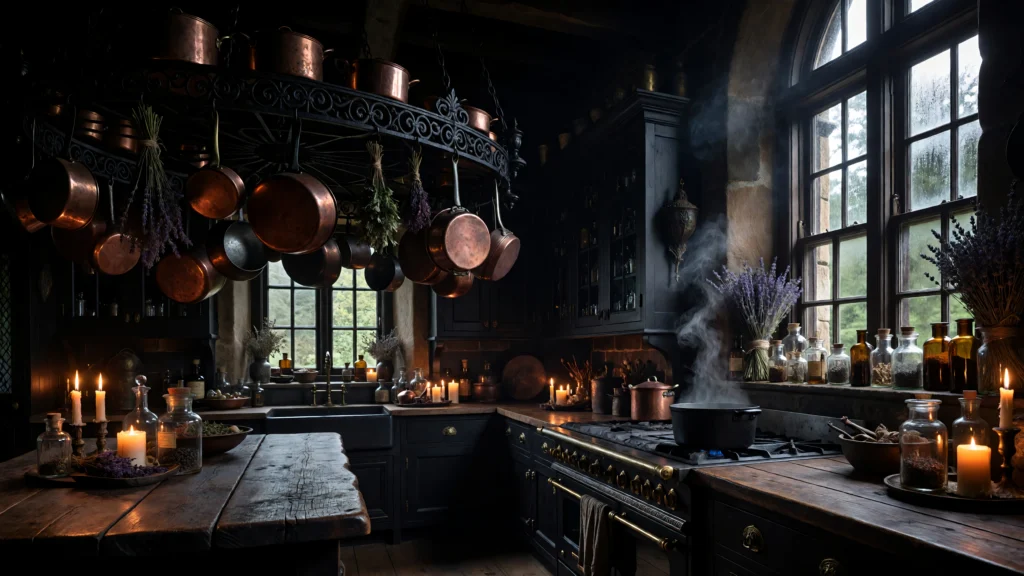
    Dark cottagegoth farmhouse kitchen showing charcoal cabinets, iron pot rack with cast iron and dried herbs, open shelving with apothecary jars, and warm amber pendant light

    The Cottagegoth Kitchen Is Not a Trend — It’s a Return

    The dark, folkloric kitchen has existed for as long as kitchens have. Long before white subway tile became the dominant language of domestic aspiration, kitchens were dim and warm and layered with the evidence of use. They smelled of something. They carried their own histories.

    We are not inventing anything here. We are remembering something that got painted over.

    The cottagegoth kitchen says: this space is mine. It carries the smell of herbs I dry and use, the weight of a pan I’ve cooked in a thousand times, the warmth of a candle lit not for a photograph but because it makes the room feel like the kind of place where real life happens. Where things are made. Where people linger longer than they planned to.

    That is not a trend. That is a homecoming.


    Save this to your dark cottagecore Pinterest boards and start gathering your cottagegoth kitchen inspiration. Explore more dark farmhouse interior ideas here on the blog — and if you’re building out a moody kitchen of your own, I want to hear about it in the comments.

    → Browse more dark home aesthetic posts
    → Shop all cottagegoth kitchen picks

  • Moody Victorian Farmhouse Study Corner — Leather Books and Iron Lamp

    Moody Victorian Farmhouse Study Corner — Leather Books and Iron Lamp

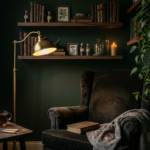
    Old leather and amber light. Books worn from years of slow evenings. A moody Victorian farmhouse study corner built for the kind of reading that forgets the hour.

    Here, in the gathering dusk, spines crack open to reveal the familiar smell of aged paper and pressed flowers. An iron lamp casts its patient glow across page after page, and the hours dissolve. This is the study corner of someone who reads by firelight, who knows the weight of a leather binding in their hands, who understands that darkness arriving outside means nothing when the right words are waiting.

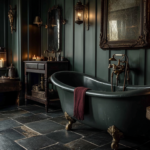
  • Dark Victorian Farmhouse Bathroom — Iron Clawfoot Tub and Stone Walls

    Dark Victorian Farmhouse Bathroom — Iron Clawfoot Tub and Stone Walls

    Stone walls that hold the cold until the steam takes over. An iron clawfoot tub, melting tapers, the quiet of a dark Victorian farmhouse bathroom at the start of the day.

    To soak here is to surrender. Cold stone walls remember centuries of morning rituals. The iron claw holds you like a gentle grip, and steam rises to meet the rough ceiling. Candles flicker at the edges—not for light, but for the permission they give to linger. This bathroom is a sanctuary, the kind where you lose track of time and find it again only in the wrinkled fingers and cooled water.

  • Gothic Dark Farmhouse Exterior — Iron Lantern and Stone Arch at Dusk

    Gothic Dark Farmhouse Exterior — Iron Lantern and Stone Arch at Dusk

    Amber lantern glow through the mist. A rough stone arch, weathered door, dried herb wreath with a black ribbon. The dark gothic farmhouse entrance that already knows what kind of evening waits inside.

    From the garden path, the house glows warm and amber. The stone arch frames entry like an invitation from another century. A wreath of dried herbs—rosemary, sage, lavender—hangs with a single black ribbon, promising that whoever lives here understands the weight of atmosphere. The lantern swings gently in the evening air, its light reaching into the mist like a beacon for the weary and the curious.

  • Dark Cottagecore Kitchen — Ceiling of Dried Herbs and Cast Iron

    Dark Cottagecore Kitchen — Ceiling of Dried Herbs and Cast Iron

    Every beam hung with dried lavender, mugwort, rosemary — the kind of ceiling that smells like memory. Dark cottagecore kitchen at its most atmospheric.

    Look up in this kitchen and see the entire year preserved. Lavender from summer, mugwort from autumn, rosemary from every season. Each bundle tied with twine, each beam heavy with green and memory-scent. A cast iron Dutch oven sits on the counter below, waiting. This ceiling is not decoration—it is sustenance, medicine, magic, and the daily practice of someone who lives in rhythm with the turning world.

  • Dark Cottagecore Kitchen Shelf — Apothecary Jars and Beeswax Candle

    Dark Cottagecore Kitchen Shelf — Apothecary Jars and Beeswax Candle

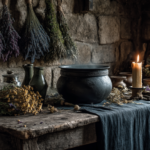
    Amber glass, handwritten labels, a half-burned beeswax taper. The dark cottagecore kitchen shelf that holds more than storage — it holds ritual.

    Each amber jar is a small library of intention. Handwritten labels in fading ink identify what lives within: dried yarrow, mullein, chamomile, whatever the season preserved. A mortar and pestle, darkened from use, sits ready. A beeswax candle, half-melted, casts its golden glow across the shelf. This is a shelf where the practical and the ceremonial live together, where every action—whether preparing dinner or medicine—is treated as sacred.

  • Dark Cottagecore Kitchen Witch — Simmering Pot and Stone Hearth at Midnight

    Dark Cottagecore Kitchen Witch — Simmering Pot and Stone Hearth at Midnight

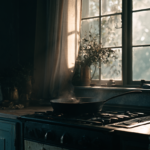
    Iron pot simmering on the hearth, a crow on the window ledge, full moon behind the fog. Dark cottagecore kitchen witch atmosphere at its most magnetic.

    At midnight, this kitchen becomes something else. Steam rises from the iron pot like intention made visible. Herbs hang in shadow from ceiling beams. The grimoire—handwritten recipes passed down, spells written in the language of ingredients—lies open on the brass stand. A crow watches from the window ledge, familiar and knowing. The full moon glows behind fog, and here, in this threshold space, the boundary between kitchen and magic dissolves.

  • Dark Romantic Cottagecore Kitchen — Deep Red Cabinets and Wrought Iron Chandelier

    Dark Romantic Cottagecore Kitchen — Deep Red Cabinets and Wrought Iron Chandelier

    Blood red paneling, aged brass faucet, a wrought iron branch chandelier dripping with candles. The dark romantic cottagecore kitchen no one else has the courage to build.

    This kitchen makes a statement. Deep blood-red cabinetry draws you in, asking you to be bold, to live dramatically, to reject beige and safety. An aged brass faucet speaks of patience and refinement. A wrought iron branch chandelier hangs heavy with pillar candles, each flame a small rebellion against the mundane. This is the kitchen of someone who knows that darkness can be romantic, that moodiness is a choice, and that cooking—true cooking—is an art form.